
Watch the explainer
Checkout our awesome and intuitive explanation of AlphaEngine.Problem & why it matters
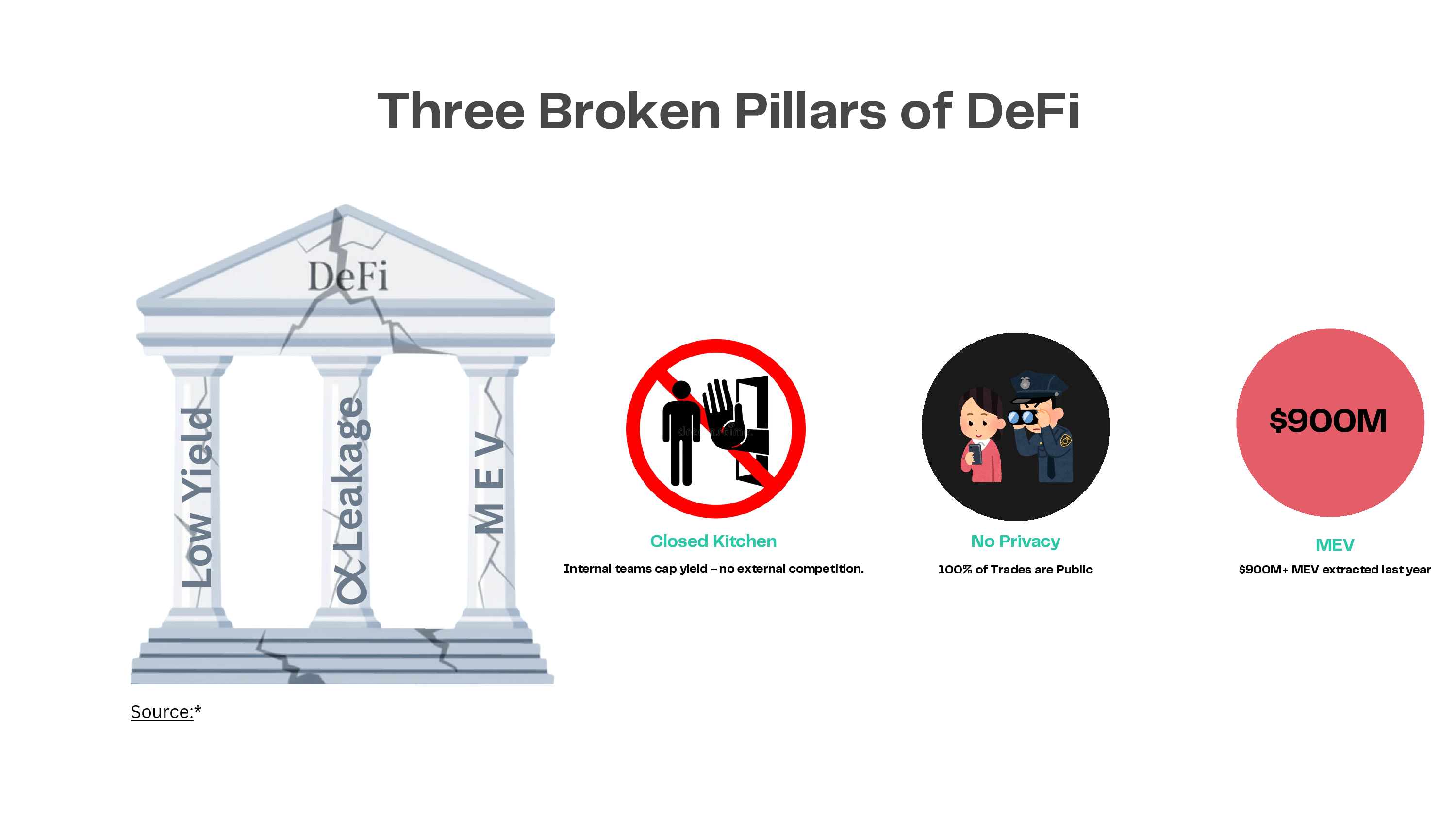
- Glass-house swaps: Showing intent in the mempool leaks size, timing, and direction; MEV picks off orderflow.
- Closed-kitchen yield: LPs must trust one internal team per protocol; real quants won’t ship alpha on transparent rails.
- No competition without privacy: Without encryption, you cannot rank strategies or route liquidity without giving away the recipe.
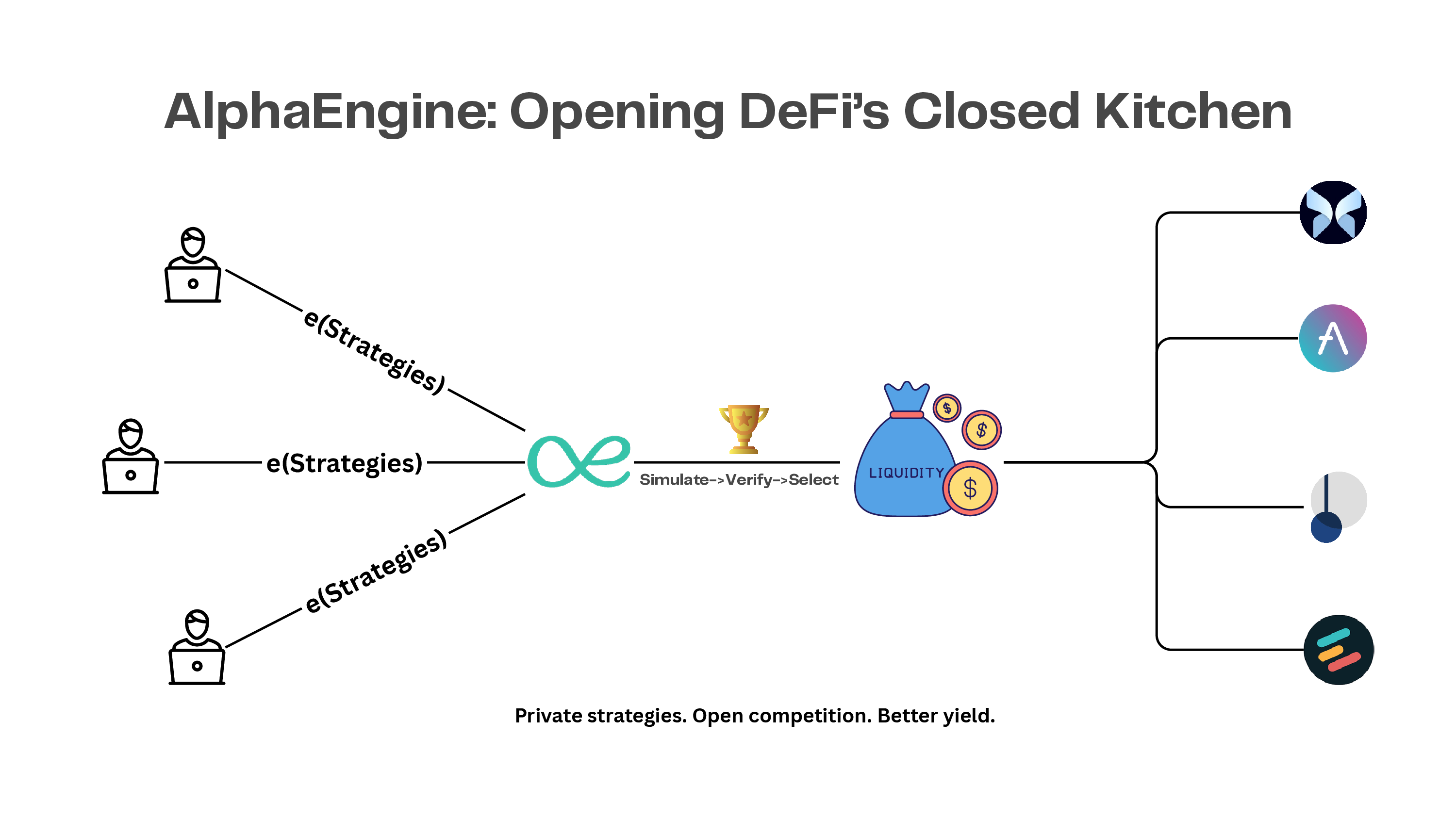
AlphaEngine is a private strategy and execution layer for Uniswap: quants send
encrypted strategies and swap intents; we simulate, rank, and route liquidity
to the winners—without revealing their edge.
Who we serve
- On-chain LPs and funds already allocating to stablecoin/Hook liquidity who want competitive, private execution.
- Independent quants/strategists who want to deploy on-chain without leaking alpha.
- Traders who want private swaps and netted settlement that minimizes MEV exposure.
Why AlphaEngine
DeFi’s glass-house problem
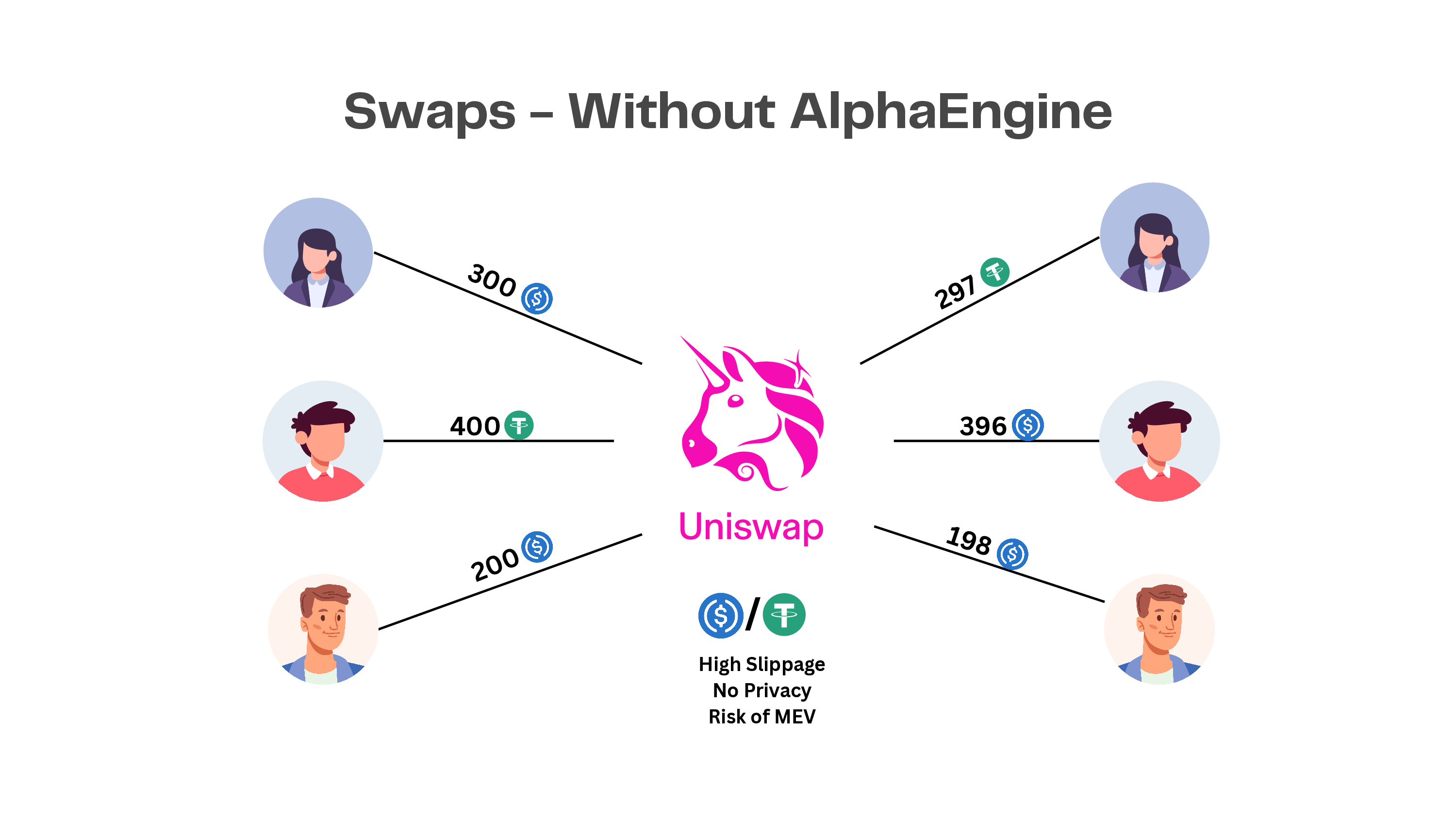
- Swaps telegraph size, timing, and direction; MEV bots front-run and back-run.
- LPs cannot invite external strategists without leaking their edge.
- Cross-chain execution introduces more leak points and inconsistent trust.
The AlphaEngine thesis
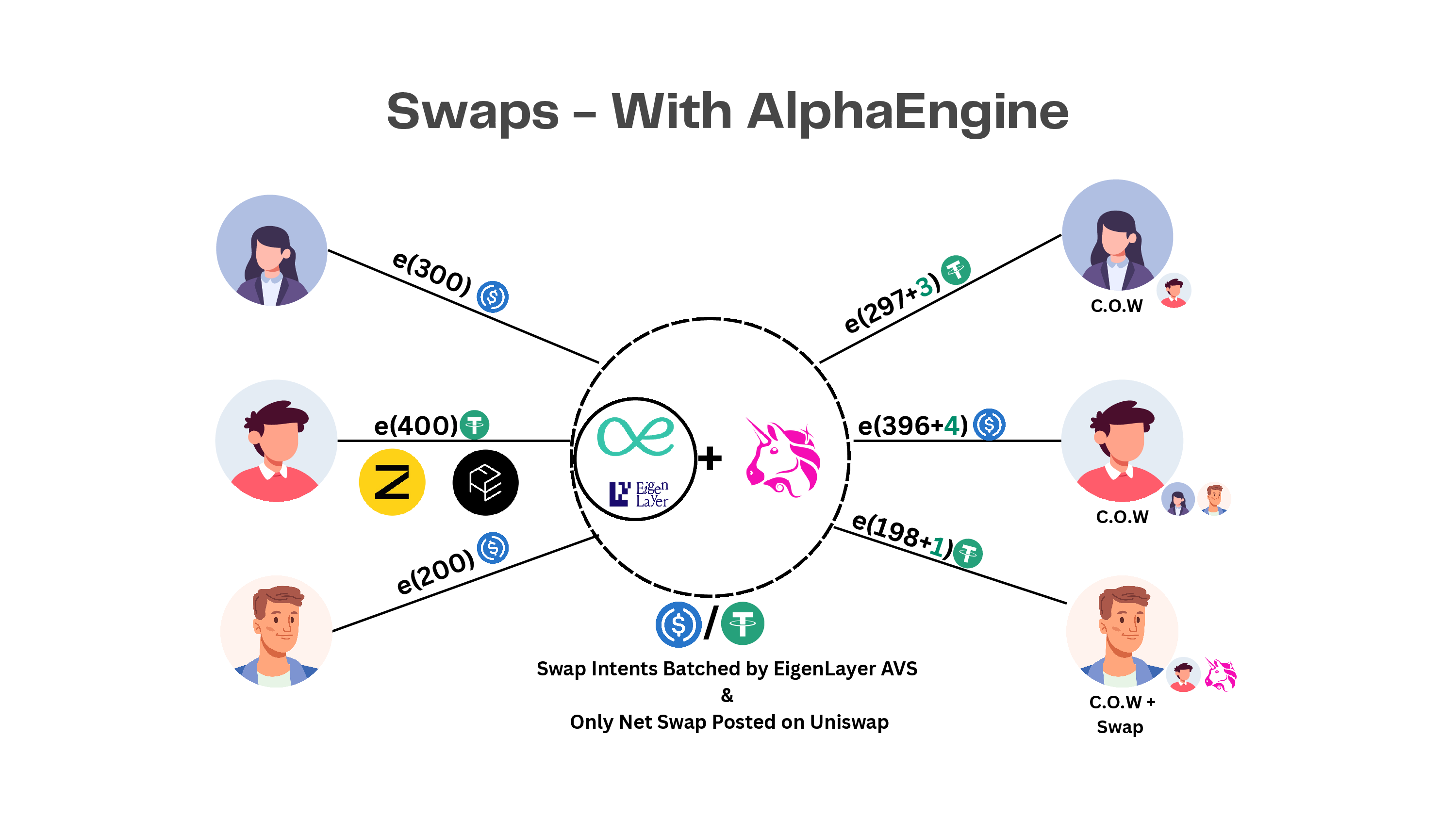
- Private by default — intents are encrypted, batched, and only a single net swap hits the chain.
- Competition over privilege — strategists submit encrypted intents, get simulated by EigenCompute operators, and only winning flows deploy.
- Multichain without trust trade-offs — Ethereum-origin attestations travel through the Nexus SDK to L2s with the same privacy and correctness guarantees.
Why now
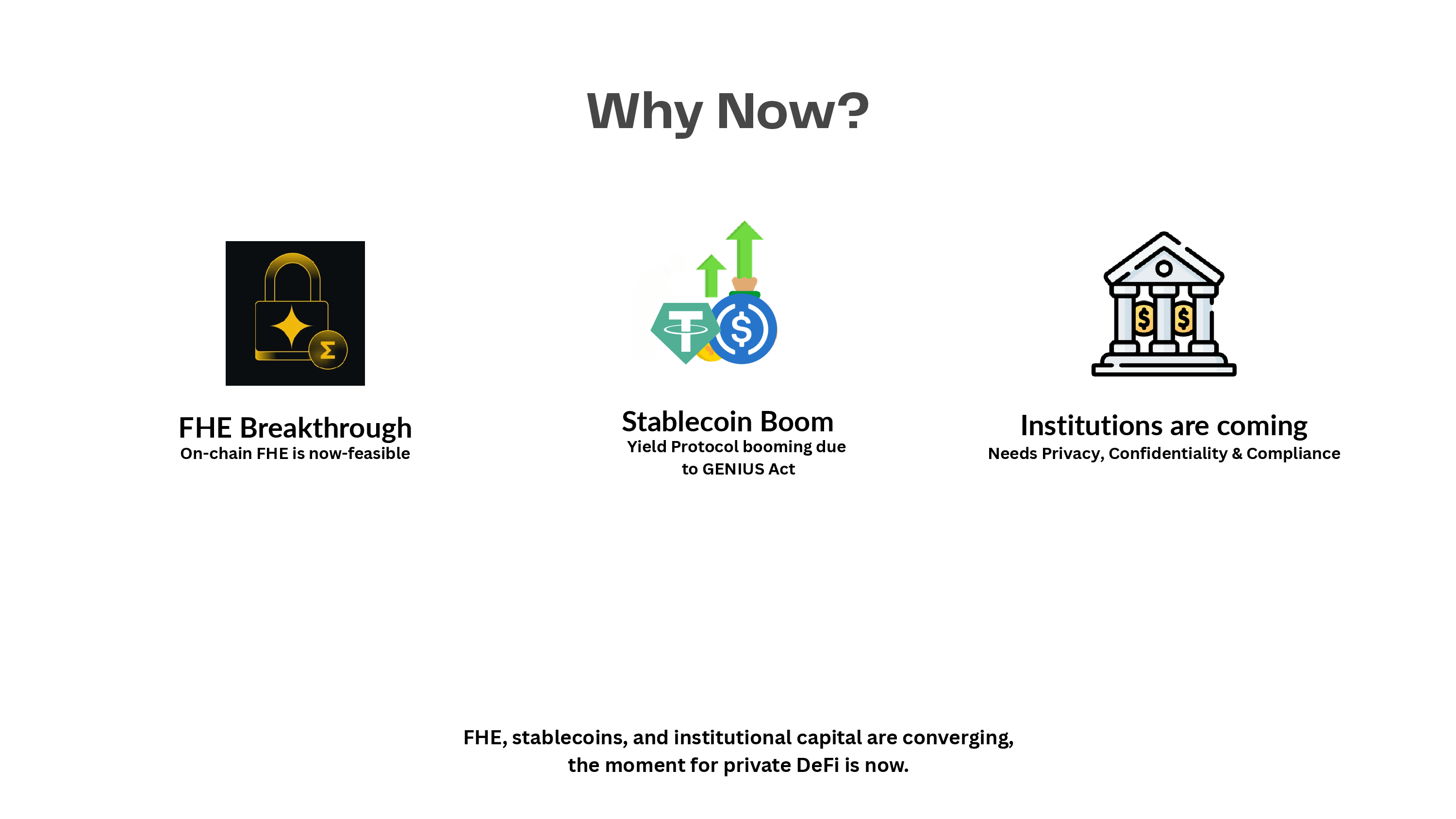
- Practical CoFHE: On-chain FHE and coprocessors have matured enough for real-time encrypted flows.
- Native integration point: Uniswap v4 hooks let us embed privacy + batching without forking the AMM.
- Market pull: Stablecoin/yield markets are booming, institutions are moving on-chain, and privacy-by-default is becoming a requirement.
What we built
- AlphaEngine hook: Uniswap v4 before/after hook that mints encrypted LP shares, queues intents, and exposes a strategy submission surface.
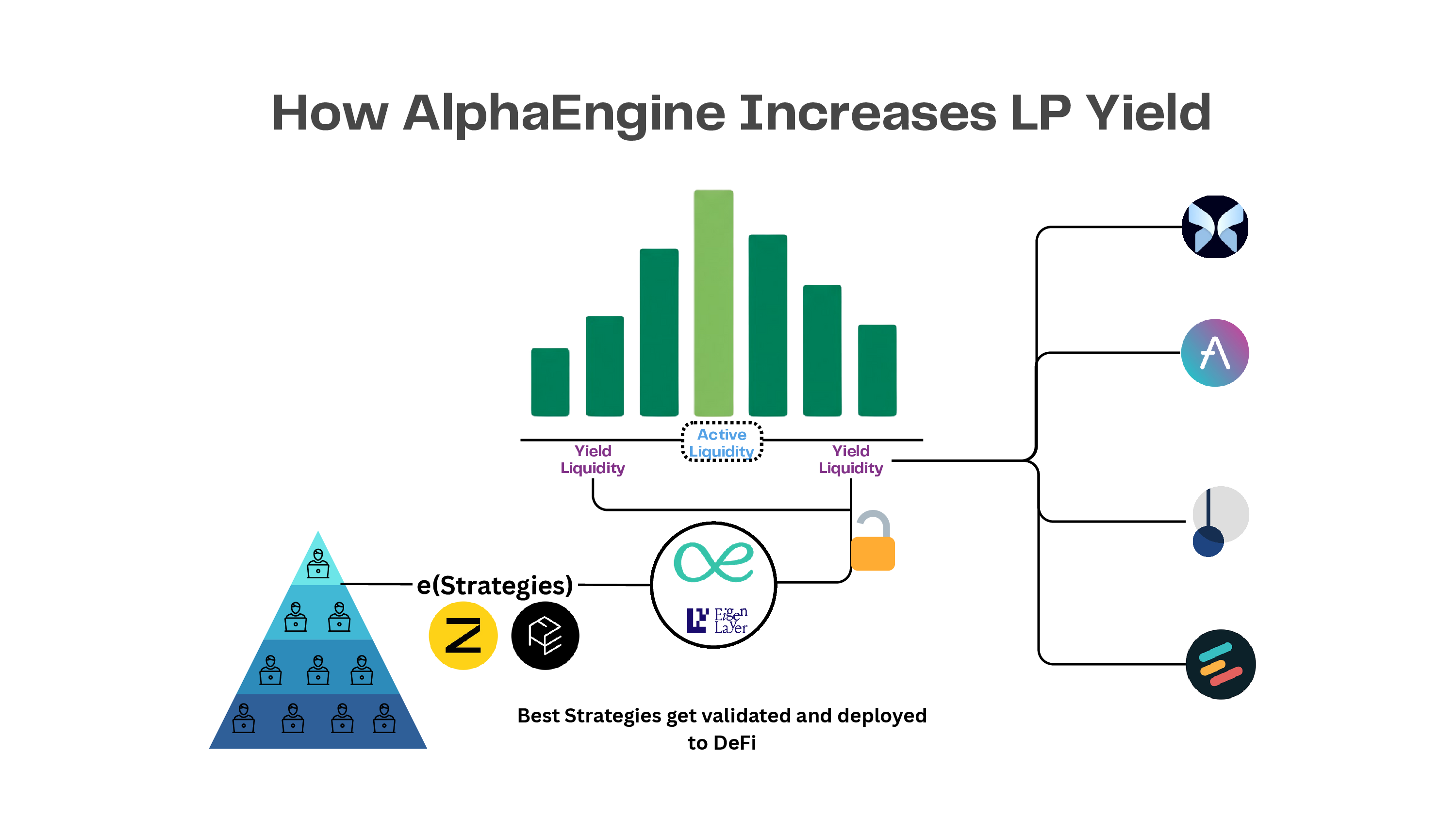
- Strategy arena: Strategists encrypt calldata and compete for allocations; the AVS simulates, ranks, and deploys the winners.
- EigenCompute AVS: Restaked operators decrypt (when permitted), net batches, simulate Universal Trade Intents, and sign settlements.
- CoFHE processor: Runs encrypted math and controlled decrypts; contracts never see plaintext.
- Nexus dispatch: Ethereum-origin batches forward to Base (and other L2s) via Nexus while preserving CoFHE guarantees.
- Frontend experience: Encrypts client-side, submits multi-intent sessions, and tracks batches through settlement.
Architecture at a glance
- Privacy wall: Intents and balances stay encrypted; only netted public flows touch the AMM.
- Competitive layer: Strategists compete via encrypted submissions; EigenCompute attests to winners.
- Cross-domain execution: Nexus relays AVS-approved payloads to L2s with Ethereum-origin attestations.
Key promises
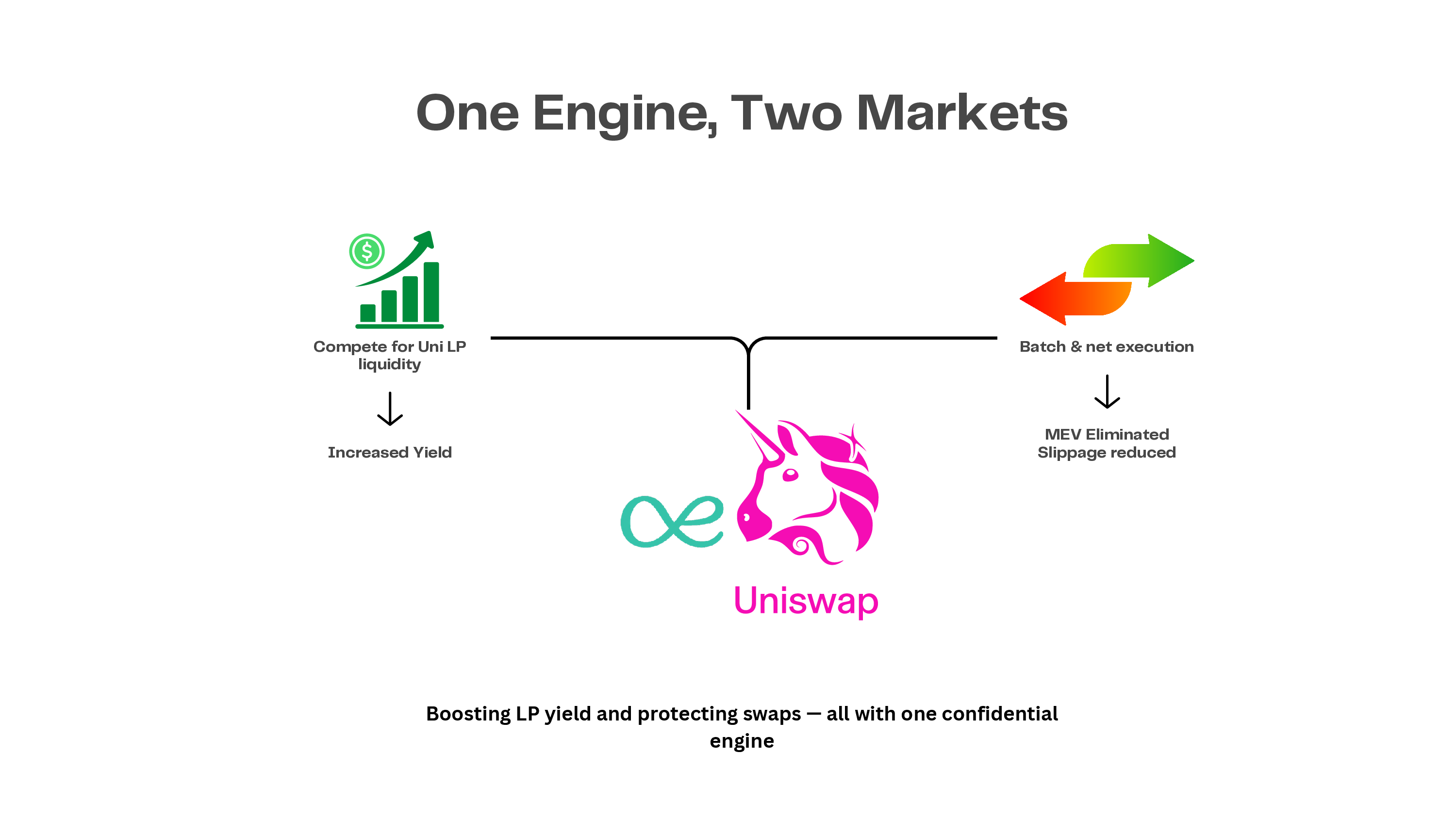
- Private by default: Encrypted intents end-to-end; only net public flows touch the pool.
- Performance-driven: Liquidity routes to the best-performing strategies, not the loudest orderflow.
- Multichain-ready: Ethereum-origin attestations travel through Nexus to L2s with the same guarantees.
Show, don’t tell
- Three broken pillars: Low yield, alpha leakage, MEV (see above).
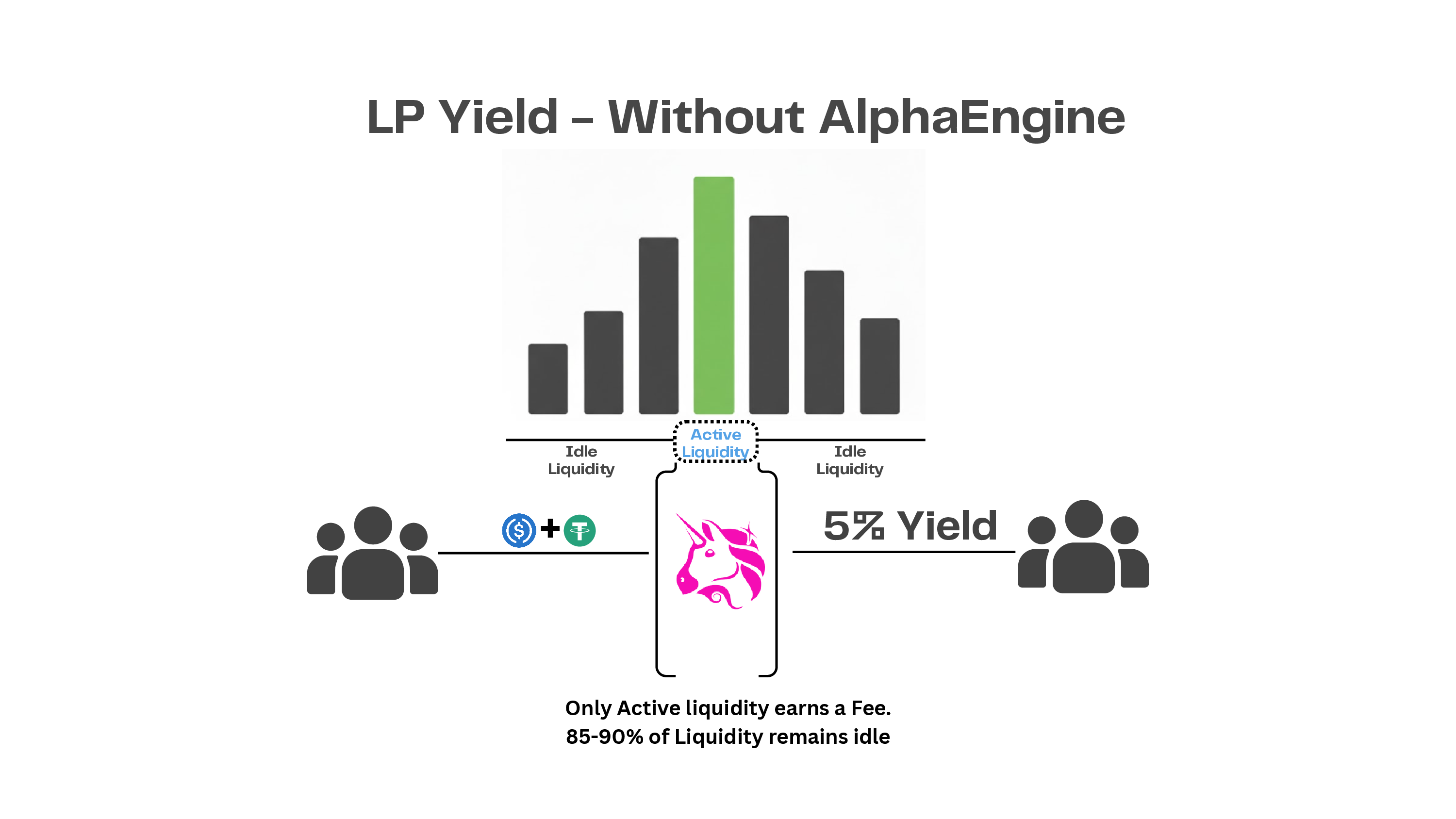
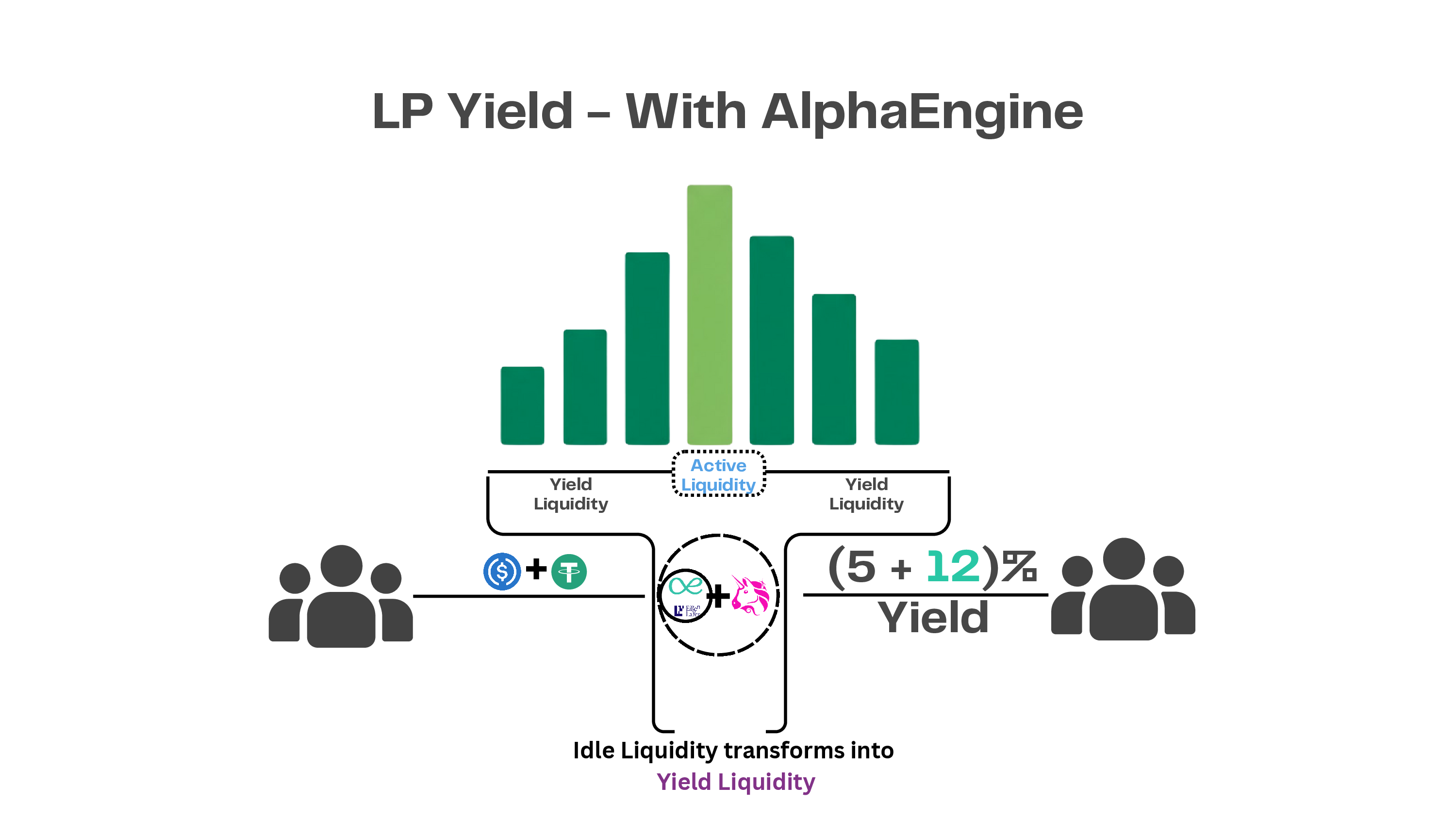
- Yield uplift: Before vs After.
- Privacy for swaps: Without AlphaEngine vs With AlphaEngine.
- Strategy-to-yield path: How we increase LP yield.
Where to go next
- See the Confidential Liquidity Flow for the end-to-end swap path.
- Review the Strategy Lifecycle for strategist submissions and multichain dispatch.
- Jump to the CoFHE processor primer and EigenCompute & operators for compute details.
- Use the Quickstart to run contracts, operator, and frontend locally.